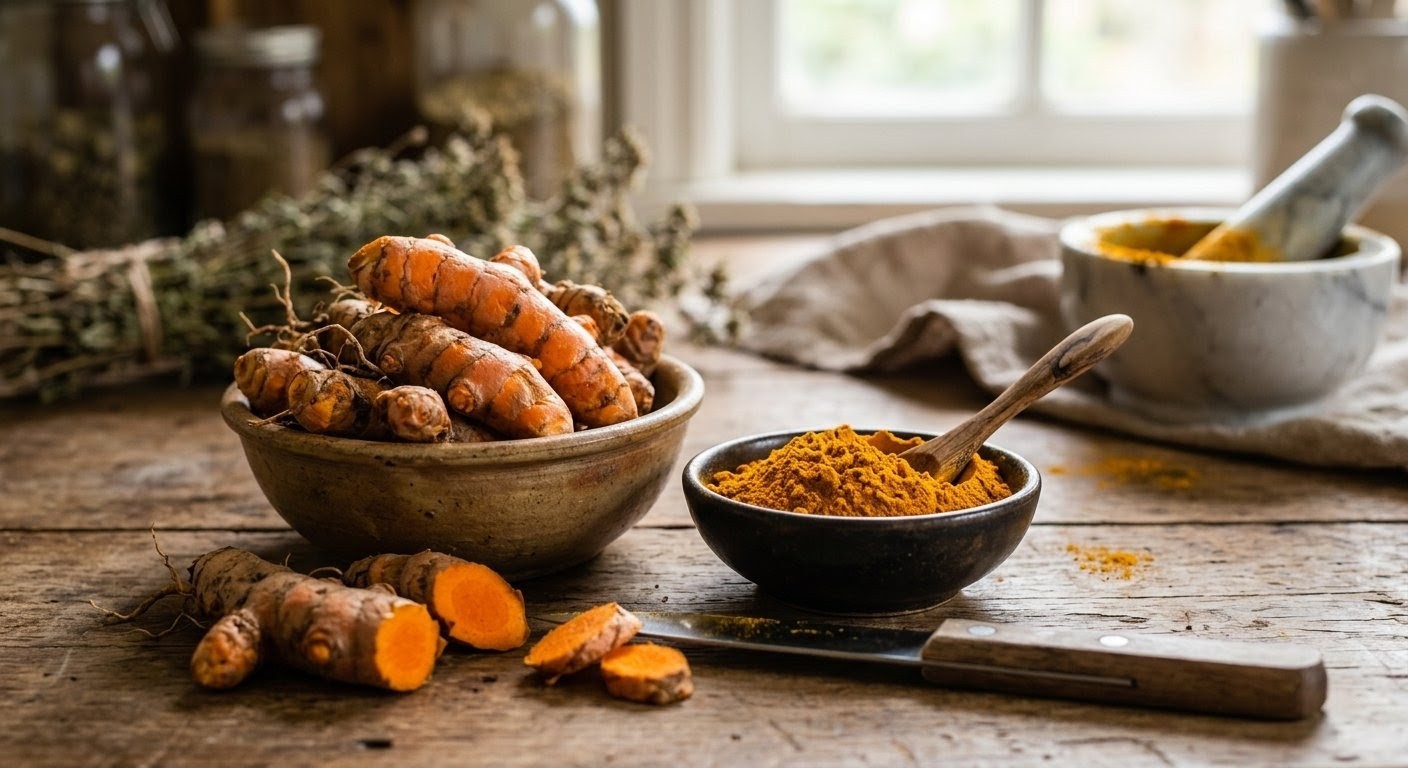
The Complete Guide to Turmeric Cultivation in Jharkhand
Everything you need to know about growing turmeric — from variety selection and soil preparation to harvest and storage.
The Complete Guide to Turmeric Cultivation in Jharkhand
Turmeric (Curcuma longa) is one of the most promising high-value crops for small and medium farmers in Jharkhand. With the right variety, soil management, and irrigation, you can earn ₹2–4 lakh per acre in a 9-month crop cycle.
This guide covers everything we've learned at Aasaankrishi Farm — from choosing varieties to managing the monsoon season.
Why Turmeric in Jharkhand?
Jharkhand's climate is ideal for turmeric:
- Annual rainfall: 1200–1600mm — exactly what turmeric needs
- Temperature: 20–35°C growing season aligns with turmeric's requirements
- Soil: Red laterite and sandy loam soils are suitable with amendments
- Market access: Kolkata, Ranchi, and Patna markets are accessible
Variety Selection: Why We Chose Lakadong
There are 30+ turmeric varieties cultivated in India. We chose Lakadong from Meghalaya for one reason: curcumin content.
| Variety | Curcumin Content | Market Price |
|---|---|---|
| Regular (local) | 2–3% | ₹60–80/kg |
| Rajapuri | 4–5% | ₹90–110/kg |
| Lakadong | 7–12% | ₹180–250/kg |
The premium price more than compensates for the higher seed cost.
Land Preparation
Step 1: Soil Testing
Before anything else, get a soil test. We found our soil had:
- pH: 5.8 (ideal is 6.0–7.5)
- Low phosphorus
- Adequate potassium
We applied lime at 400kg/acre to raise pH, and added single superphosphate to address phosphorus deficiency.
Step 2: Deep Tilling
Turmeric develops rhizomes 15–20cm underground. Shallow tilling results in stunted growth. We tilled to 30cm depth using a rotavator.
Step 3: FYM Application
Well-rotted farmyard manure at 10 tons/acre was incorporated before bed formation. This improves soil structure and water retention.
Step 4: Raised Bed Formation
This is critical in high-rainfall areas. We formed raised beds:
- Bed width: 1 meter
- Bed height: 20–25cm
- Walkway: 50cm between beds
Raised beds prevent rhizome rot during heavy monsoon rains — our single most important decision.
Planting
Best time: June–July, just before monsoon onset.
Seed rate: 800–1000 kg/acre of healthy mother rhizomes.
Spacing: 30cm × 30cm (plant to plant, row to row).
Seed treatment: Soak rhizomes for 30 minutes in a solution of Mancozeb (3g/L) + Carbendazim (1g/L) before planting to prevent fungal diseases.
Planting depth: 5–7cm, with rhizome buds pointing upward.
Irrigation Management
Turmeric needs consistent moisture but cannot tolerate waterlogging. We use drip irrigation:
- During establishment (first 30 days): 4–5 liters/plant/day
- Vegetative growth: 3–4 liters/plant/day
- During monsoon: Switch off drip — natural rainfall is sufficient
- Post-monsoon dry period: Resume drip at 4 liters/day
Critical: Monitor soil moisture with a moisture meter. Rhizome rot starts within 48 hours of waterlogging.
Fertilization Schedule
| Timing | Fertilizer | Quantity |
|---|---|---|
| Basal (before planting) | NPK 10:26:26 | 150 kg/acre |
| 30 days after planting | Urea | 25 kg/acre |
| 60 days after planting | MOP (Potash) | 50 kg/acre |
| 90 days after planting | Urea | 25 kg/acre |
We supplement with liquid fertilizers through drip irrigation (fertigation) every 15 days using humic acid, seaweed extract, and micronutrient mixes.
Harvest
Turmeric is ready for harvest 9–10 months after planting when:
- Leaves turn yellow and dry
- Lower leaves begin to drop
- Plants appear dormant
Yield expectation:
- Regular varieties: 15–20 tons/acre (fresh)
- Lakadong: 12–15 tons/acre (fresh)
Fresh turmeric has 30% DRC (dry recovery), so:
- 15 tons fresh × 30% = 4.5 tons dry turmeric per acre
At ₹200/kg dry = ₹90,000 gross revenue per acre
Common Problems and Solutions
Rhizome Rot
Cause: Waterlogging, fungal infection (Pythium spp.) Prevention: Raised beds, good drainage, seed treatment Treatment: Metalaxyl + Mancozeb drench at root zone
Leaf Blotch
Cause: Taphrina maculans fungus Treatment: Mancozeb or copper oxychloride spray at 14-day intervals
Shoot Borer
Cause: Conogethes punctiferalis Treatment: Neem oil spray or Spinosad insecticide
Our Honest Cost Breakdown
For 2 acres of Lakadong turmeric at Aasaankrishi:
| Item | Cost |
|---|---|
| Land preparation & tilling | ₹18,000 |
| Seed rhizomes (1600 kg) | ₹1,92,000 |
| Soil amendments (lime, SSP) | ₹12,000 |
| Drip irrigation setup | ₹38,000 |
| FYM (20 tons) | ₹20,000 |
| Fertilizers (season) | ₹22,000 |
| Labour (planting, weeding, harvest) | ₹35,000 |
| Pesticides / fungicides | ₹8,000 |
| Total Input Cost | ₹3,45,000 |
Expected Revenue (2 acres × 4.5 tons dry × ₹200/kg): = ₹18,00,000
Net Profit: ₹18,00,000 – ₹3,45,000 = ₹14,55,000 for 2 acres
This assumes Lakadong premium pricing and successful crop. Actual results will be documented at harvest.
What We're Still Learning
We're currently in the growing phase and will update this guide with:
- Actual vs. expected yields
- Real photo documentation of each stage
- Challenges we faced and how we solved them
- Post-harvest processing: boiling, drying, polishing
- Marketing channels that actually worked
Subscribe to our newsletter to get those updates when published.
This guide is written from our direct farming experience. Results may vary based on your specific soil, climate, and management practices. Always consult a local agriculture officer for region-specific advice.
Enjoyed this article?
Subscribe for weekly farm updates and new agricultural guides.
Subscribe for Free